For this VE day, in lockdown, wild lilies’ delicate beauty

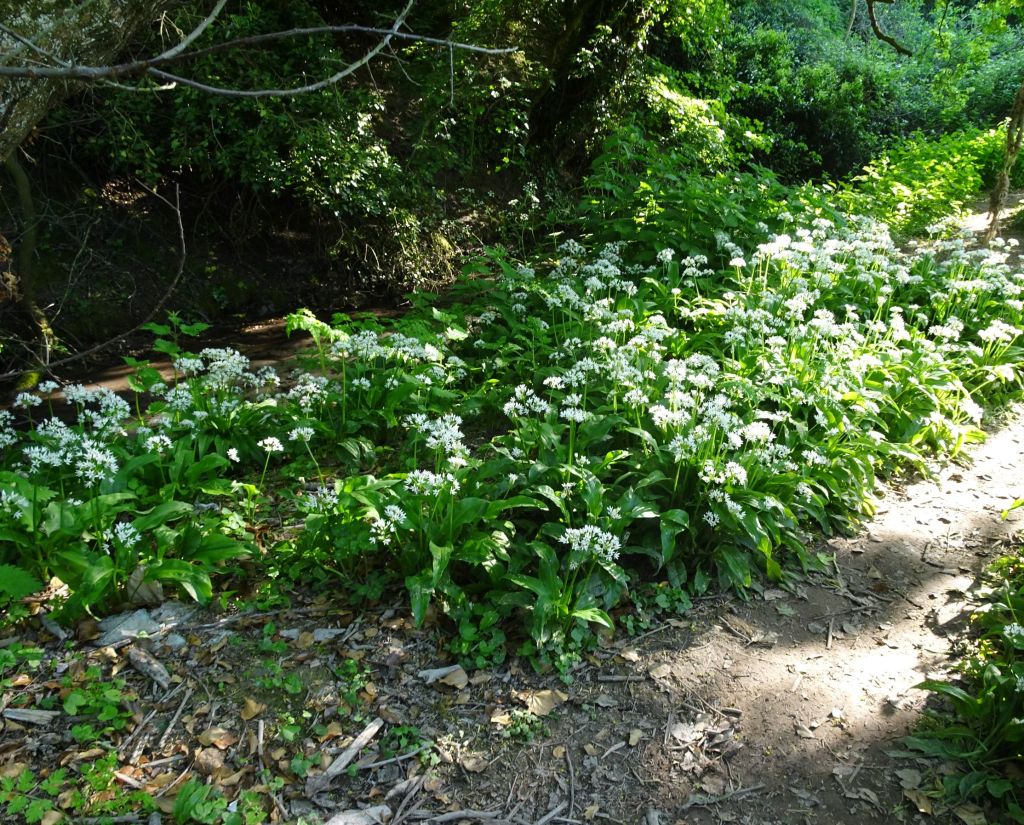
Wild lilies, known as Ramsons or wild garlic, are flowering in the moist, shady areas of Castle Mound. I would of expected such delicate, extravagant flowers to be the product of generations of cultivation – or belong to a more exotic wilderness. Yet they are on our doorstep.

To find them, start where the spring pours out into a sparkling clear pool. Follow the little stream as it curls round. As the ground becomes squishy underfoot, you will see these brilliant white delicate flowers growing alongside the path. Brush their broad, luscious leaves as you walk and the air fills with the smell of garlic.
This Easter we were not able to have in church the traditional display of Easter lilies, beautifully arranged by Pauline Miller, with a list of names next to them to whose remembrance they are dedicated. I remember my grandmother buying lilies for the Methodist chapel in Southery. Even then they were a £1 each. She paid willingly, in respect of those who had died she had loved.
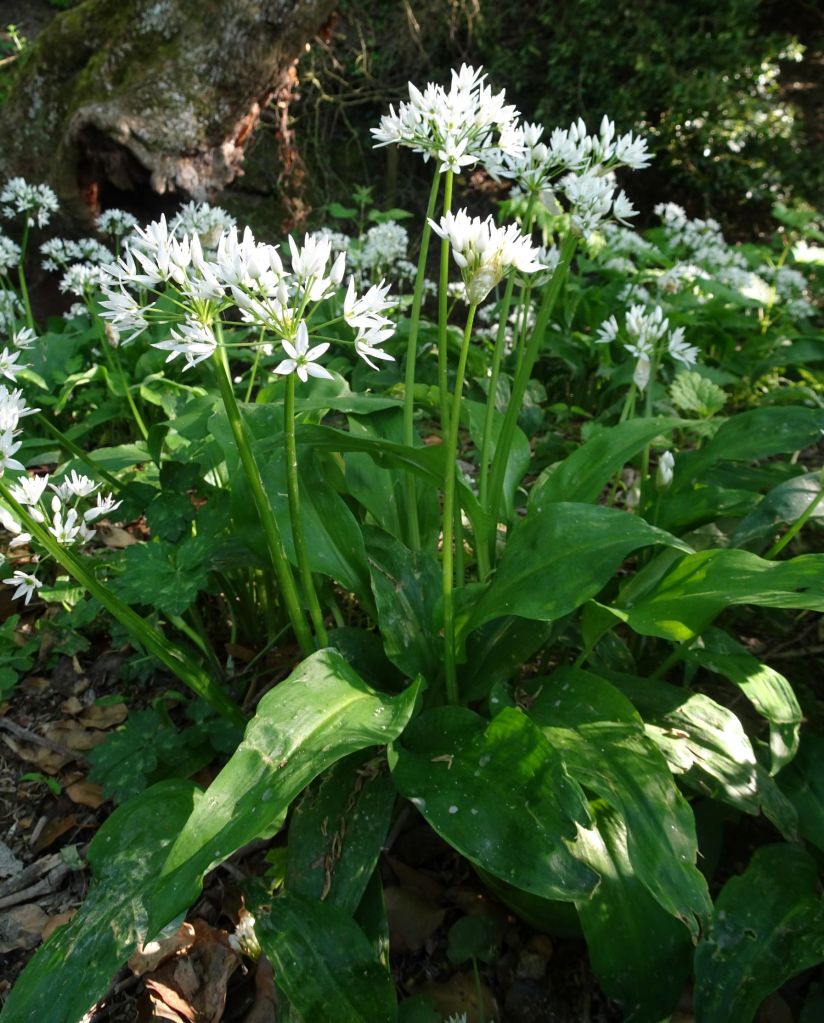
As I remember all those lost, from my family, from our country, from our world, over the years and most recently, these wonderful wild lilies, bring me comfort. The exuberant beauty of each individual flower, of which there are so many on each plant, tells me that each person is remembered and honoured, for their beauty.

Maybe today we could draw our own lily flower, sparkling with the names of those we love who are alive, or who are alive in our memories. I am going to go and do that now.

Subscribe to my blog.

Enter your email address and click Subscribe to follow this blog.
You’ll get an email each time I add another post.


This work is licensed under a Creative Commons Attribution-ShareAlike 4.0 International License.

Hedgehogs in action

Have you recently heard a strange noise coming from outside? At about 10pm last night, we heard persistent grunting, grating, snuffly noises coming from our patio. Was someone sawing wood? I opened the window to see what it was.

Peering through the darkness, I saw two slightly different sized blobs circling each other. As my eyes got accustomed to the dark, I saw they were two hedgehogs! We tried to work out what their noise sounded like. Nathalie suggested carrots being grated, I thought someone unfit running up a steep hill. Mix the two and I think you have it!

with thanks for image to Wikipedia

We needn’t have rushed to look. The hedgehogs kept at their grunting and circling for at least 90 minutes – possibly longer as we went to bed! That’s a lot of carrots grated and hills run up! Just shows we don’t always know what is going on outside our back doors… We hope this means we will have baby hoglets – yes that’s what they are called – in a month or so. As hedgehogs travel 1-2 miles a night, this is not guaranteed.

I have tried to encourage hedgehogs in the garden. If you haven’t already done so, make some piles of logs for insects, and heaps of leaves for cover. There is lots of information about how to encourage and make your garden safe for hedgehogs on the internet. The British Hedgehog Preservation Society, Tiggywinkles wildlife hospital and the RSPCA all have excellent advice and information, including how to build a simple hedgehog home. These can also be bought – a friend of mine was given one for her birthday and to her delight this was used in the first year.

When we had a new fence put up by the fabulous Prospects Trust, based at Snakehall Farm, Reach, we cut a hole in the bottom so that hedgehogs could still travel between our and the next door’s garden and onwards… If your garden fences block hedgehogs from roaming, maybe you could consider cutting some openings.

Now hedgehogs know this hole is for them!

Next how about decorating it? You could use chalk as I have – though paint would be great if you are braver!

While you have the chalks out, why not have a bit more fun? I found doing this very therapeutic…

Banksy eat your heart out…

NB: Costcutters and Tina’s have packets of chalk for sale. Good luck!

And don’t forget these next few weeks to pop your head out of doors in the evenings. You may be lucky and hear grunting…

Subscribe to my blog.

Enter your email address and click Subscribe to follow this blog.
You’ll get an email each time I add another post.


This work is licensed under a Creative Commons Attribution-ShareAlike 4.0 International License.
Buttercups – and not just any Buttercups – Bulbous Buttercups

Bulbous buttercups on Pound Hill, Burwell

Children love to play the game of picking a buttercup, then putting the flower under someone’s chin. When the chin glows yellow, to their delight they have ‘proved’ the person likes butter. Yet the Oxford Junior Dictionary has taken buttercup out of its dictionary. The word is no longer used often enough by children to merit inclusion. Buttercups are out all round our village, so now’s the time to look out for and enjoy them again.

The buttercups growing throughout the village are treasures, with their glowing colour, glossy petals and abundance and are also much loved by insects for all the pollen they provide. There are three commonish species of buttercup: creeping, bulbous and meadow. We are lucky to have the more unusual bulbous buttercups growing in our grassy areas around Burwell.

You can tell one buttercup species from another by their different leaf shape , however its really easy to tell bulbous buttercups as their underneath petals, officially called sepals, fold backwards down their stems. As you walk round the village, take a quick look.

Bulbous buttercup growing on Newmarket Road, with sepals folded downwards below the petals and fine cut leaves.

If you are with children why not let them pick a small bunch, while leaving some for others and the insects to enjoy. For a long while there has been a strict rule about not picking wild flowers. This has led to people no longer taking much notice of them or enjoying them. Buttercups are sufficiently common for picking them not to cause a problem and the plants will flower again after being picked.

Try pressing buttercup flowers – I first gained my love of flowers from pressing them. Pick some buttercups, lay them between a few layers of newspaper, put some cardboard either side and weight this ‘sandwich’ down with a few books. After a few days you can glue them into a ‘flower book’ or use them to make a card for someone who needs a bit of cheer.